



Interpretation built into your Zoom meeting
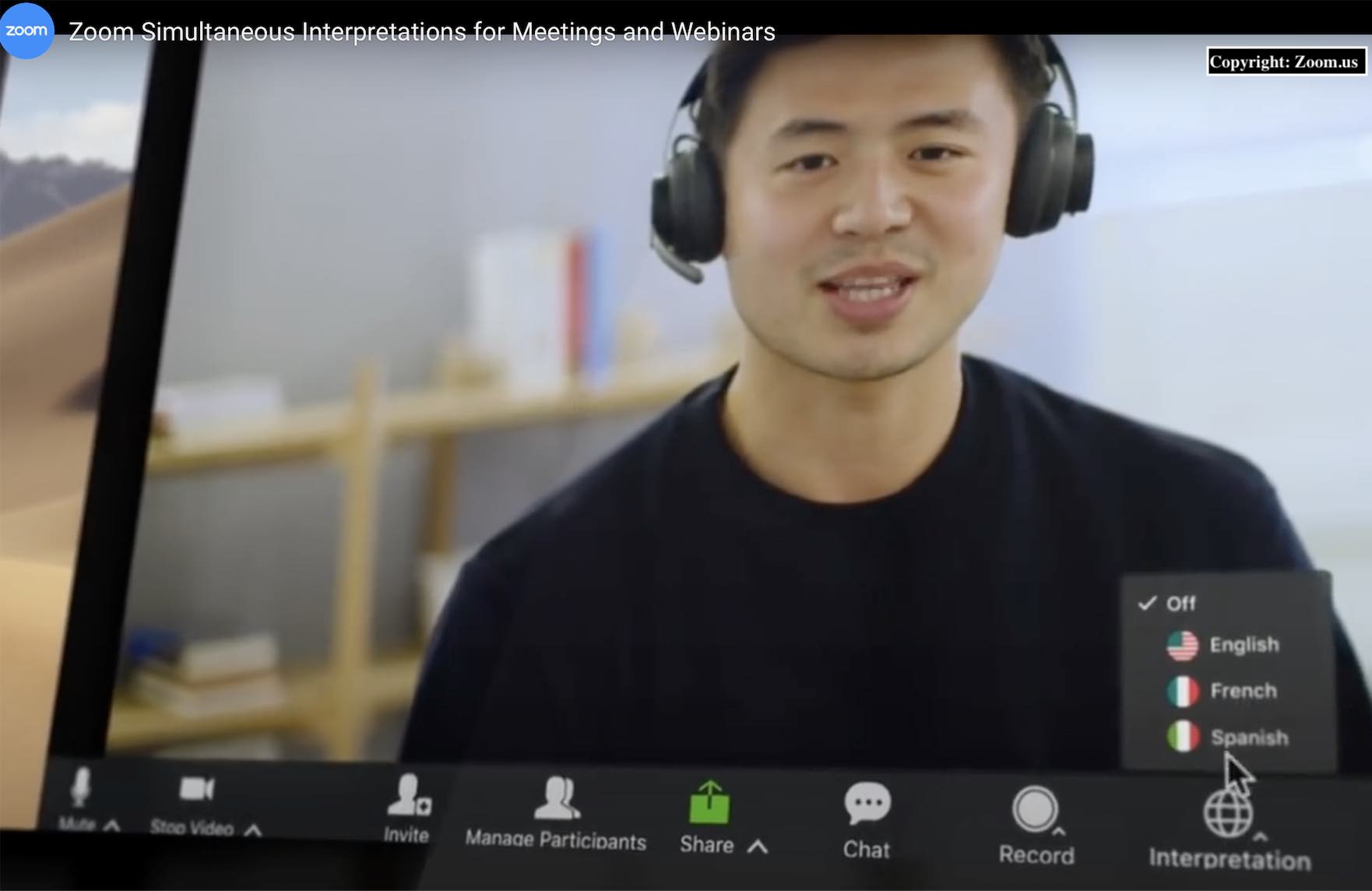
Zoom has a built-in language interpretation feature for meetings and webinars. Once it is enabled, each interpreter is assigned to a language channel and participants pick the language they want to hear. We provide the interpreters who work those channels and, if you want, the technician who sets everything up and keeps it running.
Two ways to work with us
Fully managed. We configure the interpretation channels, run a connection test with every interpreter ahead of the session, and keep a technician on the call throughout to resolve audio issues and manage channel access. You focus on the meeting.
Self-managed. Your team hosts and runs the Zoom meeting, and we supply the interpreters. This suits smaller or recurring meetings where your staff already know the platform.
What a host needs to have ready
- A Zoom account with language interpretation available and enabled in settings
- The meeting or webinar scheduled, with the link shared with us in advance
- Speakers using a headset or external microphone on a stable connection
- Slides and speaking notes sent ahead, so interpreters can prepare terminology
We can join a short test call beforehand to confirm that interpreters and technicians can connect under your organization's security settings.
Not only Zoom
The same service is available on Microsoft Teams, Webex, and Google Meet. For higher participant volumes or more language channels, we also work with dedicated interpretation platforms. See online interpretation for the full list.
When part of your audience is in a room
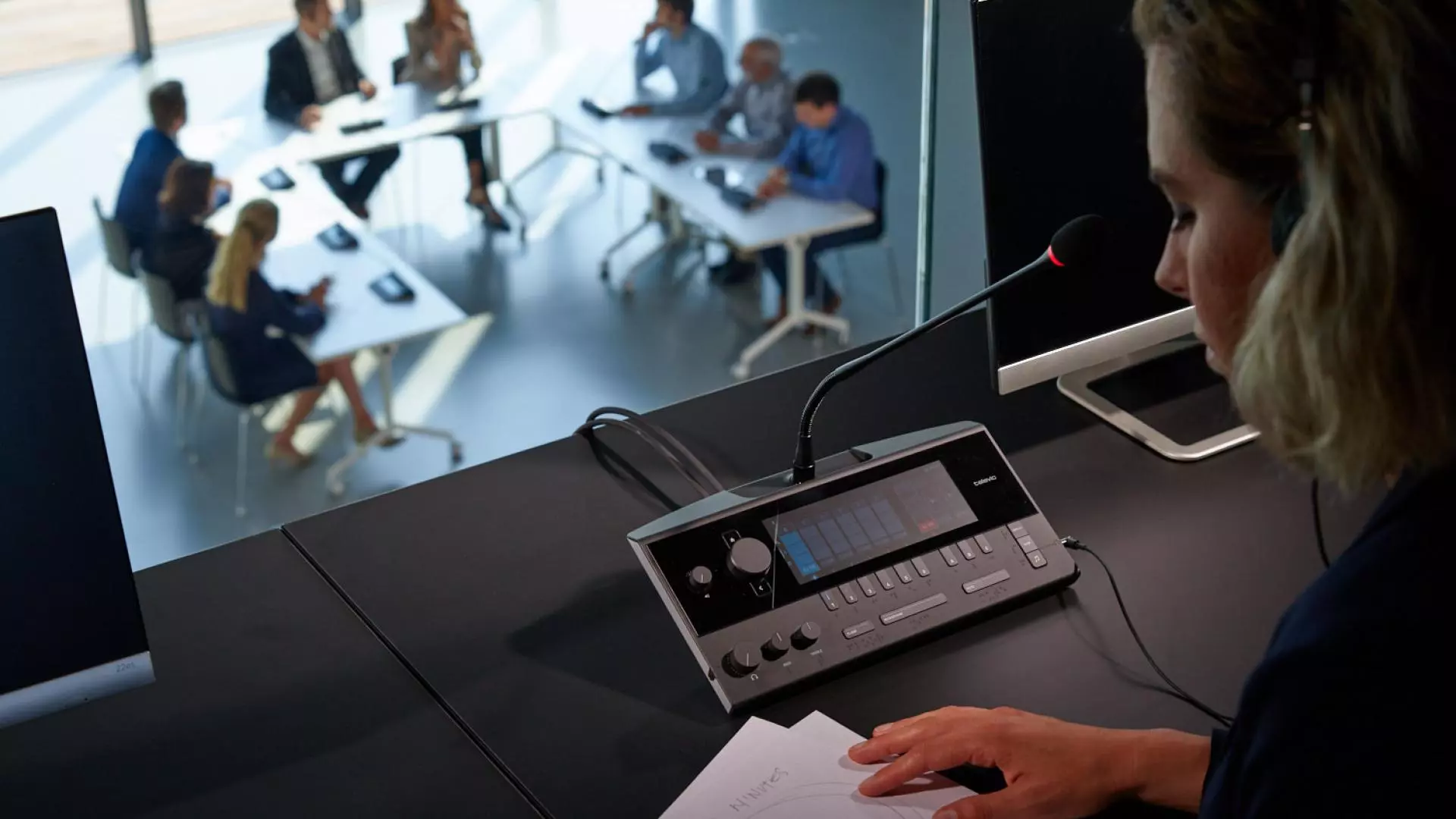
If some participants are together in a venue in Ottawa or Gatineau and others are on Zoom, that is a hybrid event. We bridge the booth feed in the room into the Zoom language channels so both groups hear the same interpretation. Details are on our hybrid and virtual event interpretation page.
What we need to quote
Your date and duration, working languages, expected participant count, and whether you want a fully managed or self-managed session.